Early on, prior to the early 1700s, the area was controlled by the Shawnee, which led some explorers to call the river that is now called the Cumberland, the Shawnee River (Williams, 1928).
By some time in the early to mid 1700s, the Cherokee took control of the area.
With the 1785
Treaty of Hopewell, the Cherokee gave control of the nearby land to the United States.
White County, TN, property was not technically part of the Hopewell Treaty, as the line seemed to follow near or just west of the Falling Water. However, settlers and
surveyors pushed the boundaries, and the United States broke the treaty by not enforcing the promised protection of Cherokee land. Later, on 25 October 1805, the
Cherokee gave control, via one of the Treaties of Tellico, of the remaining area
of what is now White County to the United States.
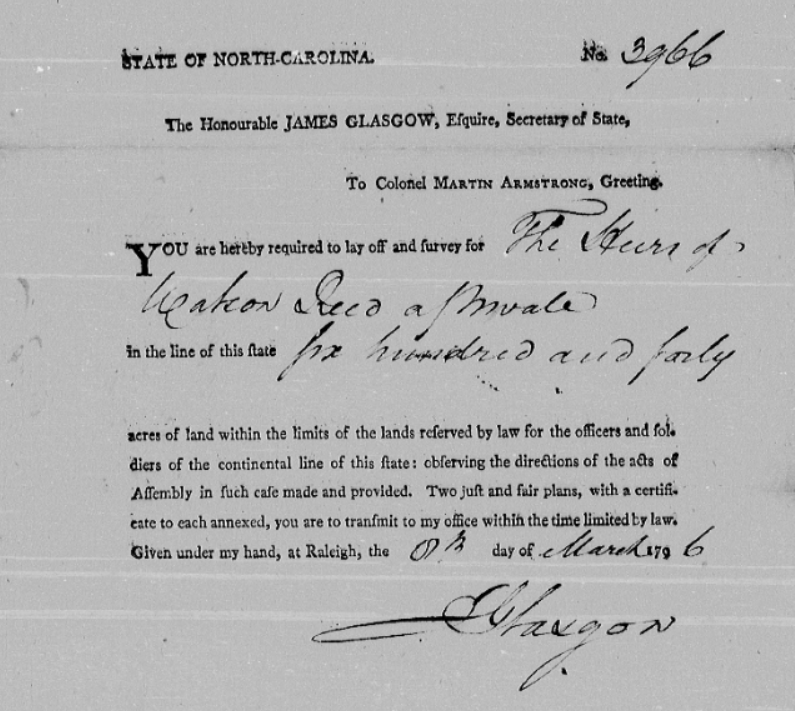
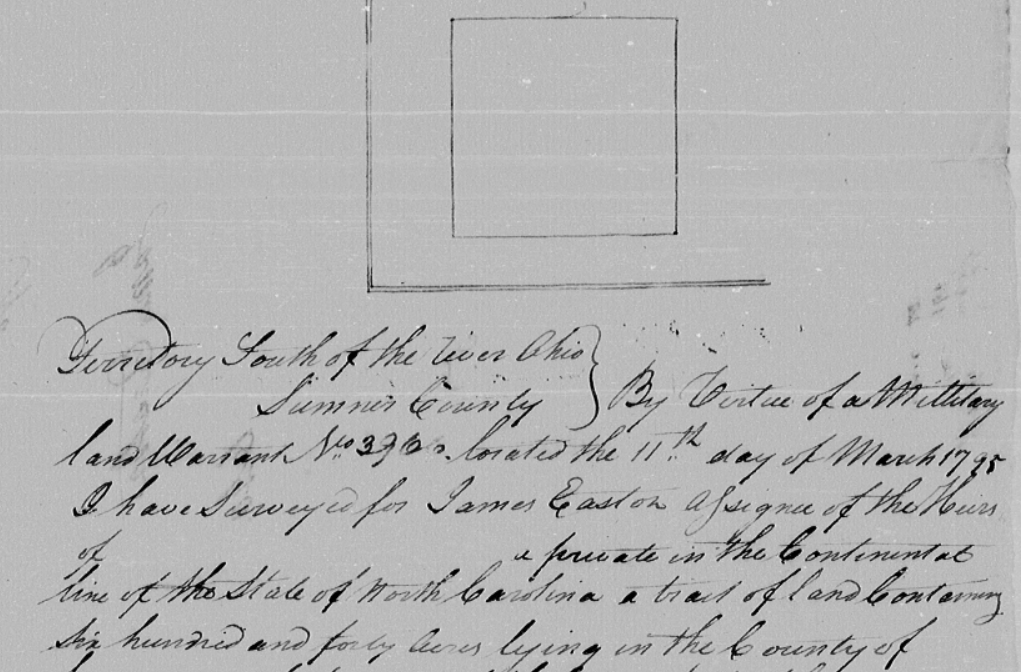
Meanwhile, the land had been situated in North Carolina until 1789, when North Carolina ceded the western lands, what is now Tennessee, to the United States. In this process, North Carolina reserved the right to make grants to its Revolutionary War soliders within the Tennessee area, so one often finds North Carolina land grants in Tennessee. By 1 June 1796, Tennessee had become a state.
Another point to consider is Tennessee county formation. The area that is now White County, TN, was in Davidson County, which had been formed by North Carolina, until Sumner County formed on 17 November 1786. On 26 October 1799, the area that is now White County became Smith County, TN, and on 6 November 1801, much of what is now White County became Jackson County, TN, although the Falling Water area remained in what was then Smith County, TN. On 11 September 1806, the area became White County, TN, and finally, on 11 February 1854, some of the area, that was previously White County, around the Falling Water became Putnam County, TN, as it is today.
Grants in Tennessee